
Biology · Animal Senses
Magnetoreception: the invisible sense that guides life
Some animals do more than see, hear or smell the world. They may also detect a silent signal surrounding the whole planet: Earth's magnetic field.
Earth has more than gravity. It also has a planetary compass.
Every second, wherever you are, Earth's magnetic field passes through your body, the oceans, mountains, forests and atmosphere. For most of us it is imperceptible. But for many species, that invisible signal can act as a compass, a travel reference or even a natural map.
Earth's magnetic field is generated mainly by the movement of conductive materials in the outer core. At the surface, that field can be described through parameters such as intensity, inclination and magnetic declination. These values vary across the planet and can serve as spatial references. Humans have used compasses for centuries to exploit that signal. Some organisms, however, appear to have integrated that information directly into their sensory systems.
"Magnetoreception turns the entire planet into a navigation reference."
Not all animals use the magnetic field in the same way
In magnetoreception, researchers often distinguish between two abilities that are not mutually exclusive but answer different questions.
Magnetic compass
Which way am I going?
It allows an animal to maintain a general direction relative to the magnetic field. It is like knowing where north, south or another orientation lies.
Magnetic map
Where am I?
It allows positional information. The animal does not only detect direction but can interpret variations in the magnetic field as concrete geographic clues.
A compass answers “which way am I going?”. A map answers “where am I?”.
We know many animals do it. The hard part is knowing how.
Magnetoreception is one of the great mysteries of sensory biology. Behavioral evidence is abundant in several species, but locating the exact receptor, the cell involved and the full neural route remains extremely difficult.
Part of the problem is physical: Earth's magnetic field is weak and passes through matter without strongly interacting with most biological tissues. To detect it, a biological sensor needs a special mechanism, and finding that in living cells is not trivial. Three major hypotheses exist, and they probably coexist in different species.
Strong behavioral evidence
Biological receptor hard to locate
Multiple possible mechanisms
Different across species
Interface between biology and physics
One of the least understood senses
Three hypotheses for one mystery
Magnetite
The mineral that might act as a needle
Magnetite is an iron oxide with magnetic properties. The hypothesis proposes that some organisms may carry microscopic crystals capable of aligning with Earth's magnetic field. By moving or exerting tension on cellular structures, those crystals could activate nerve signals.
A mineral inside a living being. A compass needle at microscopic scale.
Cryptochromes
Quantum chemistry in the retina
These are light-sensitive proteins involved in circadian rhythms and proposed as the basis of a magnetic compass in birds. The radical-pair hypothesis suggests that light excites the molecule, creating radical pairs with unpaired electrons, and Earth's magnetic field can subtly influence the chemical outcome of that reaction.
In some birds, the compass may not be in the beak but in the chemistry of light.
Electromagnetic induction
Detecting magnetism through movement
Another possibility is that some animals detect magnetic fields indirectly. Moving through a magnetic field can generate an electrical signal if the organism has suitable electroreceptive structures. This hypothesis is especially relevant in some aquatic animals.
A passive sensor that converts movement into magnetic information.
When light, retina and electrons enter the scene
One of the most fascinating ideas in modern magnetoreception is that some animals may detect the magnetic field through light-sensitive molecules called cryptochromes. These proteins take part in biological processes related to light and circadian rhythms, but they have also been proposed as candidates for explaining the magnetic compass of birds.
In nocturnal migratory birds, the best-known idea is the radical-pair mechanism. Light excites a molecule, radical pairs with unpaired electrons are generated, and Earth's magnetic field can subtly influence the chemical outcome of the reaction. That difference could end up modifying a visual or neural signal processed by the bird as orientation information.
A Nature study showed that cryptochrome 4 in the European robin, a nocturnal migratory bird, is magnetically sensitive in vitro and more sensitive than cryptochrome 4 in non-migratory species tested in the same study. It is molecular evidence that the mechanism could exist, even though the full route in a living animal is still being investigated.
"In some birds, the compass may not be in the beak but in the chemistry of light."
Animals that read the magnetic field
Magnetoreception is not a trait of one species alone. It appears, with varying levels of evidence, in organisms that are very different from one another.
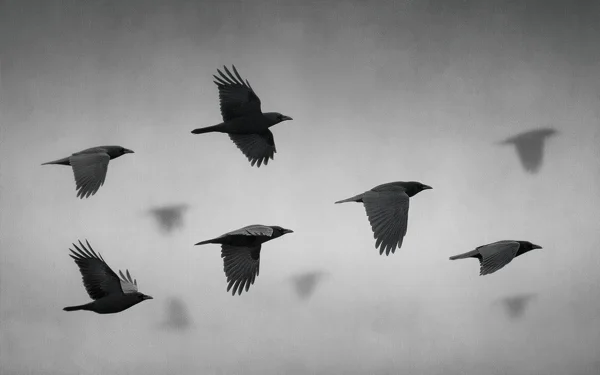
Migratory birds
Many birds travel thousands of kilometers while combining several cues: the Sun, stars, odors, visual references and the magnetic field. In nocturnal migratory birds, the cryptochrome and radical-pair model remains one of the most active hypotheses.
For a migratory bird, the sky is not only light. It may also be orientation.

Sea turtles
From a very early age, they cross huge ocean routes and appear to use magnetic information to orient in open water. Experiments with loggerhead turtles have separated the 'magnetic map' from the 'magnetic compass' through controlled tests.
A newly hatched turtle may enter the ocean with an invisible reference we cannot feel.
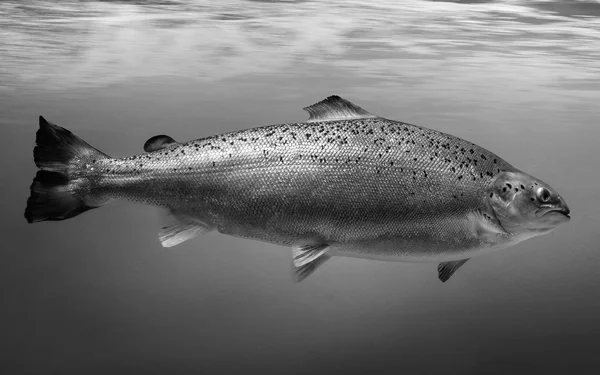
Salmon
They are famous for returning to specific regions after long ocean journeys. Experiments with juvenile salmon suggest they can use combinations of magnetic intensity and magnetic inclination to assess geographic position. That 'magnetic map' appears to be inherited.
Not all maps are learned. Some may already be written into biology.
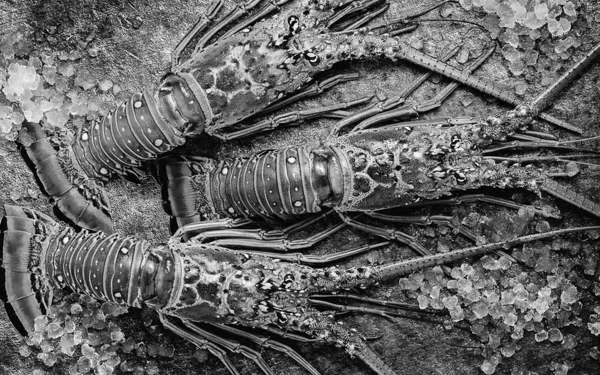
Spiny lobsters
They have shown remarkable navigation abilities. A classic Nature paper concluded that true navigation in spiny lobsters may be based on a magnetic map sense.
Even on the seafloor, the planet offers coordinates.

Magnetotactic bacteria
Some unicellular organisms build structures called magnetosomes containing magnetic crystals arranged in chains. These chains help the bacterium align with Earth's magnetic field and move toward favorable environmental conditions.
The biological compass did not begin in large animals. It may exist even in microscopic organisms.
A powerful compass, but not a perfect one.
Magnetoreception should not be imagined as a perfect human-style compass inside an animal's body. Many studies suggest magnetic responses can be weak, variable or context-dependent. The magnetic signal is small compared with thermal and biological noise.
That is why many animals seem to use it as an additional reference rather than their only navigation system. Migratory animals combine magnetism with light, smell, stars, currents, memory and landscape. Magnetoreception is one piece of the system, not the entire system.
Animals do not navigate with one signal alone. They combine magnetism, light, smell, stars, currents, memory and landscape.
Do humans have magnetoreception?
In humans, magnetoreception has not been demonstrated as a conscious orientation ability comparable to that of birds, turtles or salmon. Still, some studies have found neurophysiological responses to controlled changes in the magnetic field.
A 2019 eNeuro study reported specific alpha-band brain responses to rotations of magnetic fields with intensity similar to Earth's. The authors themselves noted that the presence of human magnetoreception had been tested only a few times and with inconclusive results. The finding is interesting, but it does not establish that humans can consciously orient using the magnetic field.
Scientific note
This does not mean people can consciously 'feel north'. It means there is an open line of research into whether the human brain can process certain magnetic changes unconsciously. Those are very different claims.
"In humans, magnetoreception is not a settled claim. It is a scientific frontier."
Magnetoreception changes our idea of the senses
For a long time, we explained animal perception through our own senses: sight, hearing, smell, taste and touch. But nature is not limited by human experience.
Magnetoreception reminds us that each species lives in a different version of the world. Where we perceive empty space, other forms of life may find direction, memory, route or territory.
Animal migration
Understanding magnetoreception helps explain how some species carry out massive migrations without GPS, maps or direct learning.
Conservation
If certain animals depend on magnetic cues, human infrastructure or environmental disturbance may interfere in some contexts. This is an active ecological research line.
Quantum biology
The cryptochrome hypothesis connects animal navigation with quantum processes in living systems, one of the most fascinating areas of contemporary biology.
Biomimetics
Understanding biological sensors capable of detecting weak fields could inspire new navigation, sensing and advanced material technologies.
Myths and realities

The planet is not silent.
We simply do not all hear it in the same way. Magnetoreception is a reminder that biology can do things we would never have imagined from our own sensory experience.

Free Birth Chart
Discover the sky that existed when you were born
We reconstruct the astronomical map of the moment of your birth with exact planetary positions and advanced interpretation.
Get your free chartFrequently asked questions about magnetoreception
What is magnetoreception?
Magnetoreception is the ability to detect magnetic fields, especially Earth's magnetic field. Many animals use it to orient, migrate or recognize geographic regions.
What animals have magnetoreception?
It has been studied in migratory birds, sea turtles, salmon, lobsters, insects, magnetotactic bacteria and other organisms. The evidence and mechanism vary by species.
How does it work?
There is no single universal explanation. The three main hypotheses involve magnetite-based sensors, light-sensitive chemical reactions mediated by cryptochromes, and electromagnetic induction.
Is it related to quantum physics?
In migratory birds, an important hypothesis proposes that proteins called cryptochromes may generate radical pairs sensitive to Earth's magnetic field. That mechanism involves electron spin-related phenomena.
Do humans have magnetoreception?
It has not been demonstrated that humans possess a conscious magnetic orientation ability. Some studies have found brain responses to controlled magnetic changes, but the issue remains open.
Is it the same as a compass?
Not exactly. A human compass is a mechanical tool. In living beings, magnetoreception may depend on molecules, minerals, cells, chemical signals and neural processing.