
Venus and Earth: Divergent Paths in the Cosmos
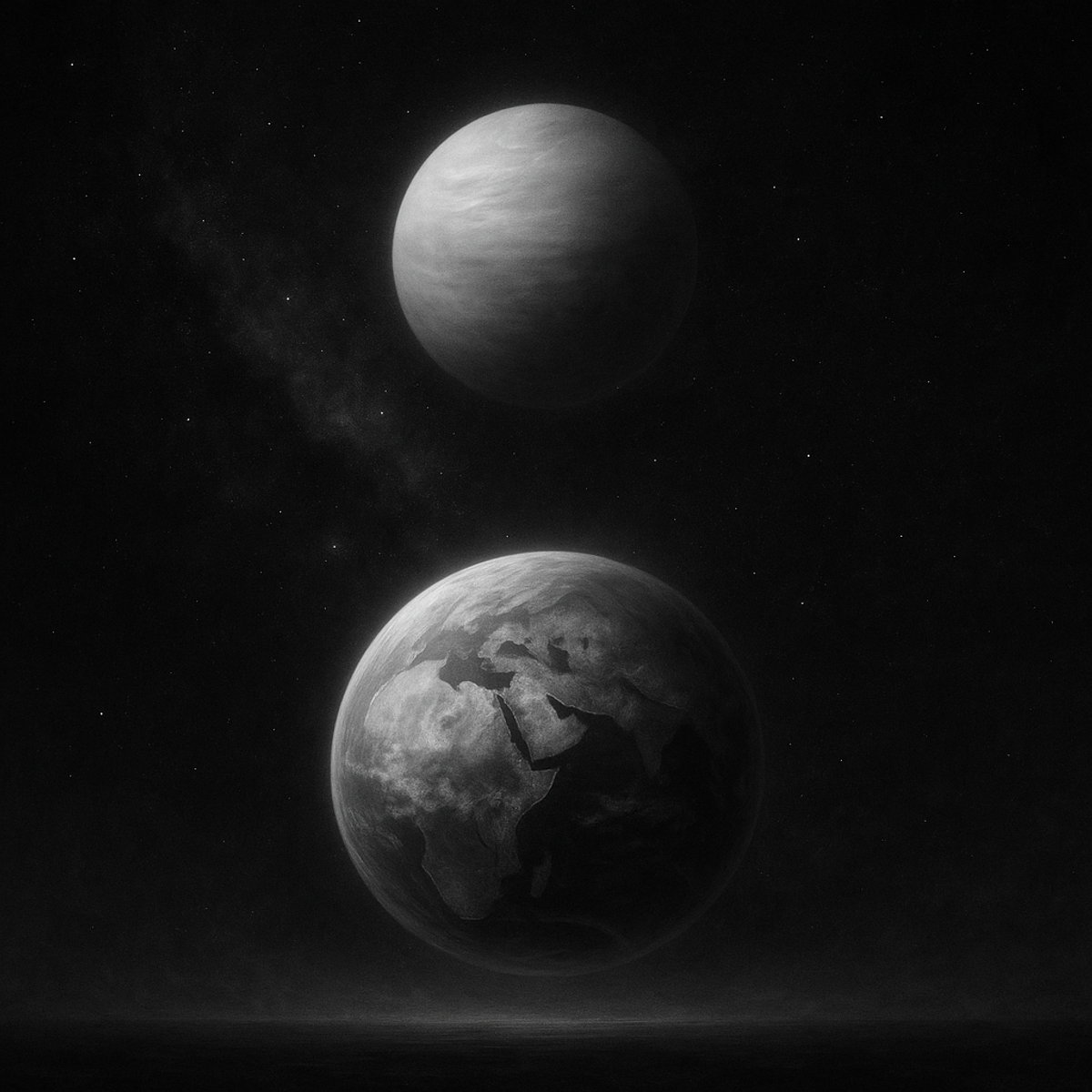
Explore why Venus became a scorching inferno while Earth flourished with life. Discover how astronomical and chemical processes influenced these destinies.
The initial similarities of Venus and Earth
Venus and Earth share similar dimensions, leading to the thought that they might have had parallel histories. Both orbit close to the Sun and are primarily composed of rock. These similarities once made astronomers consider Venus a promising place to find life.
Despite their similarities in size and composition, the current conditions on Venus are dramatically different. Understanding why this dichotomy exists requires analyzing how their divergent paths began millions of years ago.
The atmosphere and greenhouse effect on Venus
One of the most decisive factors in Venus's transformation is its atmosphere. Composed mostly of carbon dioxide, it has formed a dense blanket causing a runaway greenhouse effect. This effect traps the Sun's heat, raising surface temperatures on Venus to levels that would melt lead.
With temperatures exceeding 450 degrees Celsius, Venus's atmosphere has made its surface so hostile that it doesn't allow for the existence of liquid water, an essential element for life as we know it. This phenomenon contrasts with Earth's lighter, more humid atmosphere, which regulates the climate more stably.
The loss of water and the Sun's role
Venus might have had water in its early days, similar to young Earth. However, proximity to the Sun and intense radiation contributed to the dissociation of water molecules. Hydrogen, being light, escaped into space, while oxygen reacted with other elements, contributing to a carbon dioxide-rich atmosphere.
Unlike Venus, Earth developed a magnetic field that protects its atmosphere from the solar wind, preserving water and forming oceans. Oceans are not only reservoirs of life but also climate regulators, helping to maintain a balanced greenhouse effect.
Volcanic activity and its impact
The geological history of Venus is marked by intense volcanic activity. It's believed that its volcanoes have released large amounts of greenhouse gases, amplifying global warming. This activity might have covered the surface with lava, erasing almost all evidence of liquid water.
In comparison, Earth has experienced equally significant volcanic episodes, but its tectonic dynamics and surface renewals allow for the formation of diverse ecosystems. Plate tectonics help recirculate carbon, thus moderating long-term temperatures.
Lessons Venus offers humanity
The comparative study of Venus and Earth provides valuable lessons about climate and the greenhouse effect. Venus is an extreme example of what could happen if the balance of greenhouse gases is profoundly altered.
Understanding Venus not only satisfies scientific curiosity but also warns about the fragile balances that sustain life on Earth. Learning from these sibling worlds prepares us to face the challenges of climate change in our own home.

Free Birth Chart
Discover the sky that existed when you were born
We reconstruct the astronomical map of the moment of your birth with exact planetary positions and advanced interpretation.
Get your free chart