
The Voyager Mission: Explorers of the Infinite
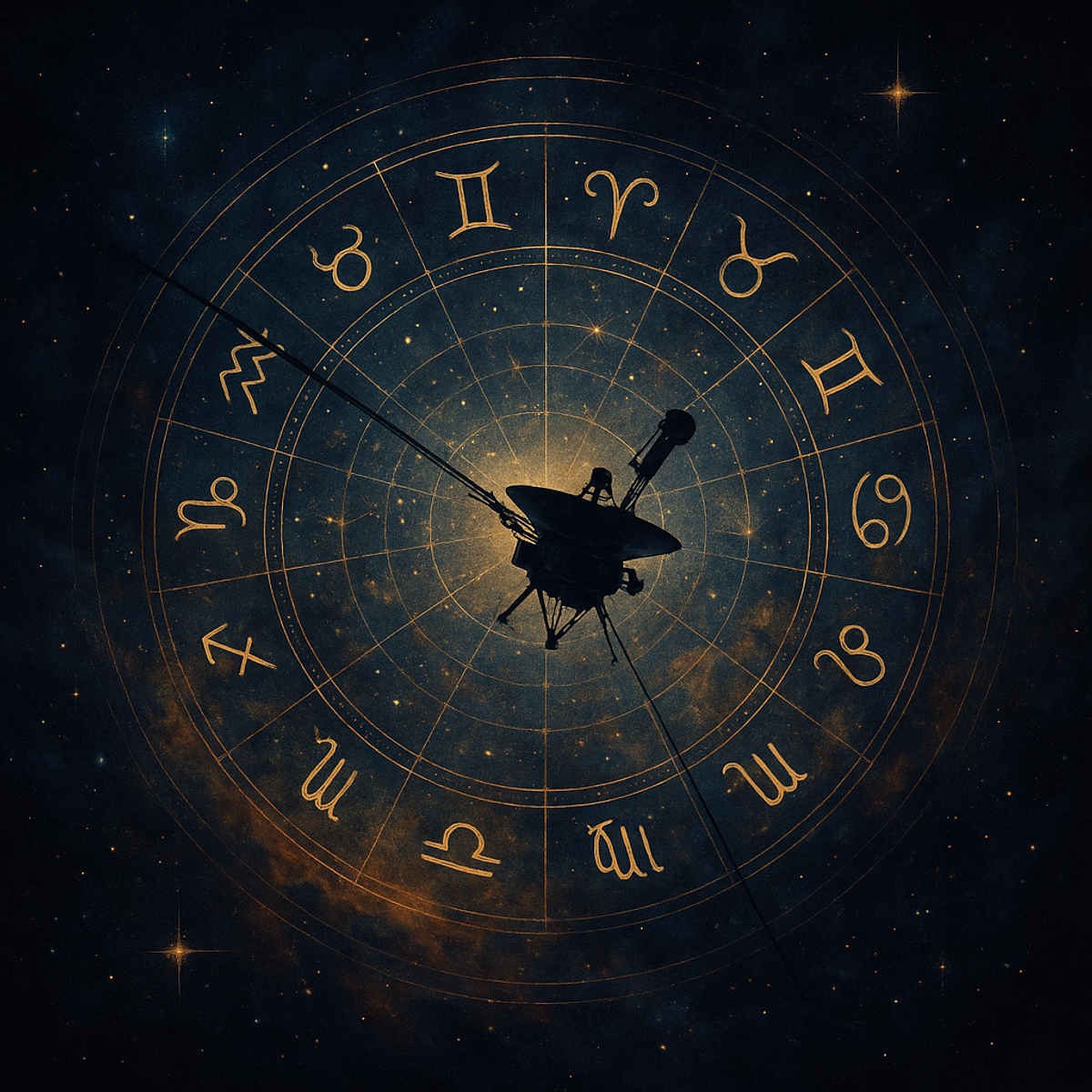
The Voyager spacecraft, pioneers of interstellar exploration, reveal the vastness of the cosmos. Since their 1977 launch, they've transformed our understanding of the universe.
The Historical Context of the Launch
In 1977, NASA launched the Voyager 1 and Voyager 2 probes on a mission that would transform our understanding of the solar system. Taking advantage of a unique planetary alignment, these robotic spacecraft became pioneers in traversing the vast expanses of space, guided by curiosity and the desire to unravel the mysteries of the cosmos.
The initial goal was ambitious: the Voyagers would explore Jupiter and Saturn, revealing never-before-seen details about these gas giants. However, the scope of their mission far exceeded expectations, becoming cult objects for astronomy enthusiasts.
Revolutionary Discoveries
The Voyager spacecraft gifted us with the first close-up images of Jupiter and Saturn, revolutionizing our knowledge of these planets. With the Voyagers, we discovered Saturn's rings in detail, Jupiter's Great Red Spot, and several moons, like Io, with its unexpected volcanic activity.
Beyond Saturn, Voyager 2 continued to Uranus and Neptune, recording the first and so far only close encounters with these distant planets. Discoveries about their atmospheres, magnetic fields, and moons changed the perception of these celestial corners, enriching our cosmic map.
The Long-Term Legacy
Both probes, although launched with 1970s technology, continued to transcend human limits. As their journey took them beyond the confines of the solar system, both missions contributed to the understanding of the heliosphere and its interaction with interstellar space.
Voyager 1 was the first to cross the heliopause, the boundary where the solar wind meets the interstellar medium. Its observation captured vital data about the transition from the Sun-dominated environment to the space between the stars, expanding the frontiers of space science.
The Messages of the Voyagers
Each probe carries a golden record with messages from Earth: sounds, music, and even greetings in 55 languages. These records are interstellar time capsules, an attempt by humanity to communicate with potential extraterrestrial civilizations that might one day encounter these galactic messengers.
The content, selected by a committee led by Carl Sagan, includes everything from Bach pieces to children's greetings, showcasing an image of human diversity and aspirations, an echo of who we are and have been throughout our shared history.
Challenges and the Future of the Mission
Surpassing 46 years in space, the Voyagers continue to send data even amidst millions of kilometers beyond Earth. However, energy resources are limited. NASA expects that by the 2030s, these probes will lose definitive contact, silencing this extraordinary chapter.
Meanwhile, the legacy of the Voyagers persists, inspiring new generations of cosmic explorers. Pathways to future interstellar missions are opening, with the hope that one day, humans or machines, we can follow in the footsteps of these pioneers, who, with their relentless spirit, continue to challenge our understanding of the cosmos.

Free Birth Chart
Discover the sky that existed when you were born
We reconstruct the astronomical map of the moment of your birth with exact planetary positions and advanced interpretation.
Get your free chart