
The Kraken: Myth and Reality of the Giant Squid
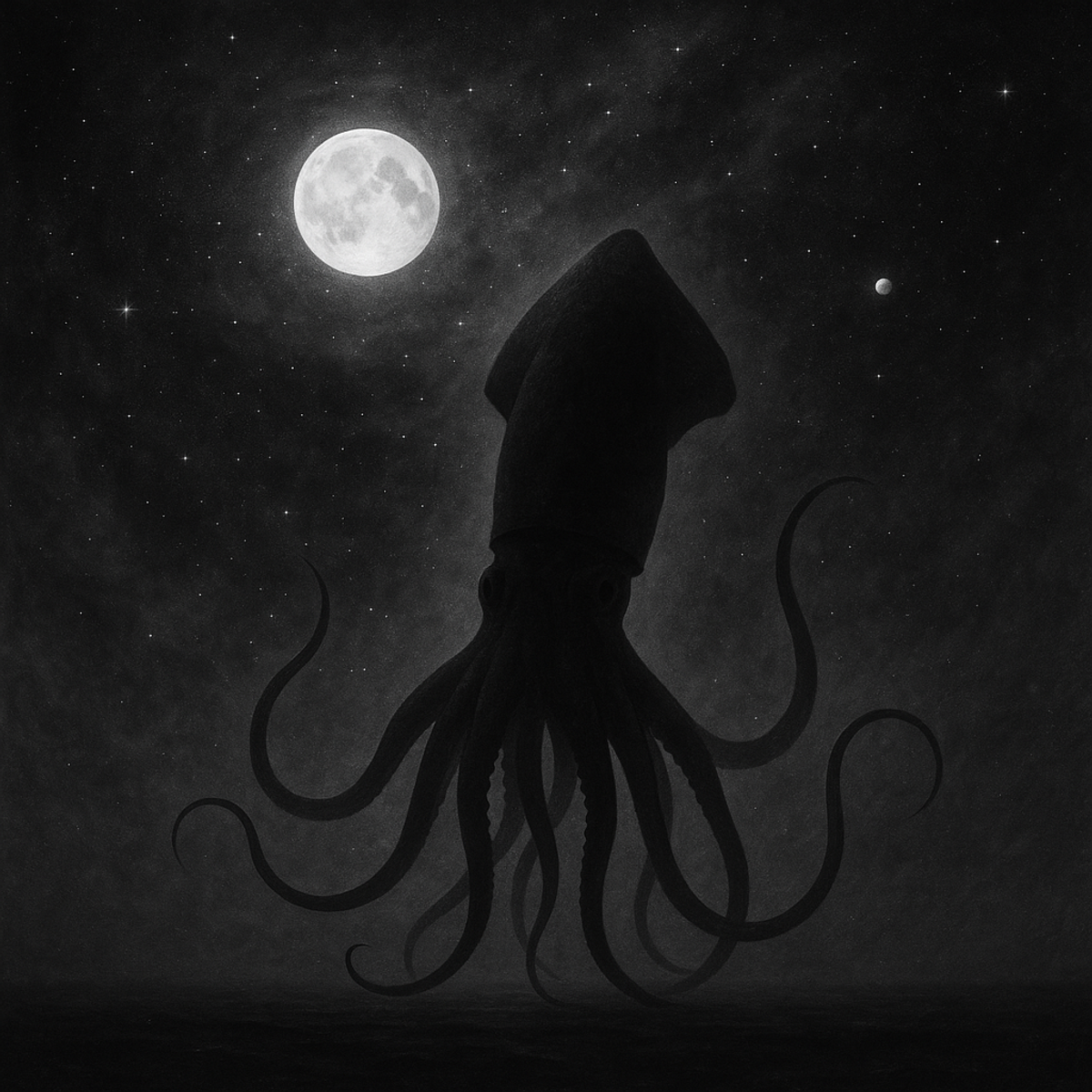
Explore the enigma of the Kraken, from its terrifying myth as a ship-destroyer in deep waters to its possible biological inspiration in the formidable giant squid.
The Kraken in Norse Mythology
The Kraken is one of the most impressive sea creatures in Norse mythology. This legendary beast, described as a tentacled monster of colossal proportions, was feared by sailors of past eras. It was said to inhabit the deep, icy waters of the North Atlantic, occasionally emerging to destroy ships and devour men who fell into the sea.
Stories of the Kraken came to life mainly in Scandinavian legends of the 13th and 14th centuries. In these narratives, the Kraken was not only a monster of immense strength but also a creature whose presence altered the environment, causing dangerous currents and whirlpools capable of sinking ships.
Representations of the Kraken in Literature
The Kraken has inspired writers and poets throughout the centuries, leaving its mark on literature in various forms. One of the most famous mentions is found in the verses of English poet Alfred Lord Tennyson. His poem 'The Kraken' evokes a dark and majestic image of this creature, sleeping in the depths of the sea in its abyssal refuge.
Besides poetry, the Kraken has also been a recurring topic in adventure literature and horror novels. Many of these works reflect the fear of the unknown and the fascination with nature's feats, using the Kraken as a symbol of the uncontrollable forces lurking in the natural world.
Biological Evidence: The Giant Squid
The fascination with the Kraken eventually led to speculation about real beings that might inhabit the oceans, paving the way for the existence of the giant squid. This creature, for which there is scientific evidence, shares some characteristics with the legendary Kraken, such as its size and the enormous proportions of its tentacles.
Giant squids, scientifically identified as belonging to the genus Architeuthis, dwell in deep waters and are extremely difficult to study due to their inaccessible natural environment. They are believed to reach up to 13 meters in length, which could explain why ancient sailors mistook them for mythical creatures. These squids have large eyes and tentacles that help them catch prey in the dark ocean depths.
The Kraken in Popular Culture
The figure of the Kraken has transcended ancient pages to become an icon of current popular culture. It frequently appears in movies, video games, and series, often depicted as a terrifying sea monster. This trend reflects not only human interest in sea creatures but also how myths adapt and evolve to remain relevant.
The popularity of the Kraken has steadily grown, featuring prominently in film franchises like 'Pirates of the Caribbean,' where its imposing presence adds a dramatic and supernatural touch to the stories. Through these modern manifestations, the Kraken continues to capture the public's imagination, uniting generations through ancient sea myths and contemporary narratives.
The Legacy of the Kraken
Despite its origin in legends older than written memory, the Kraken has managed to endure in cultural consciousness thanks to its adaptation to new contexts and meanings. Beyond the terror its stories originally inspired, the Kraken now represents the mystery of the ocean and the rich tradition of human storytelling around natural forces.
At the intersection of myth and reality, the Kraken and the giant squid continue to be subjects of study and admiration. We are reminded that although we may have dismissed the legends of sea monsters, the oceans still hold secrets to be discovered. The Kraken, therefore, symbolizes both the knowledge acquired and the wonder that still awaits us in the vast and deep sea.

Free Birth Chart
Discover the sky that existed when you were born
We reconstruct the astronomical map of the moment of your birth with exact planetary positions and advanced interpretation.
Get your free chart