
The Enigma of the Ninth Planet
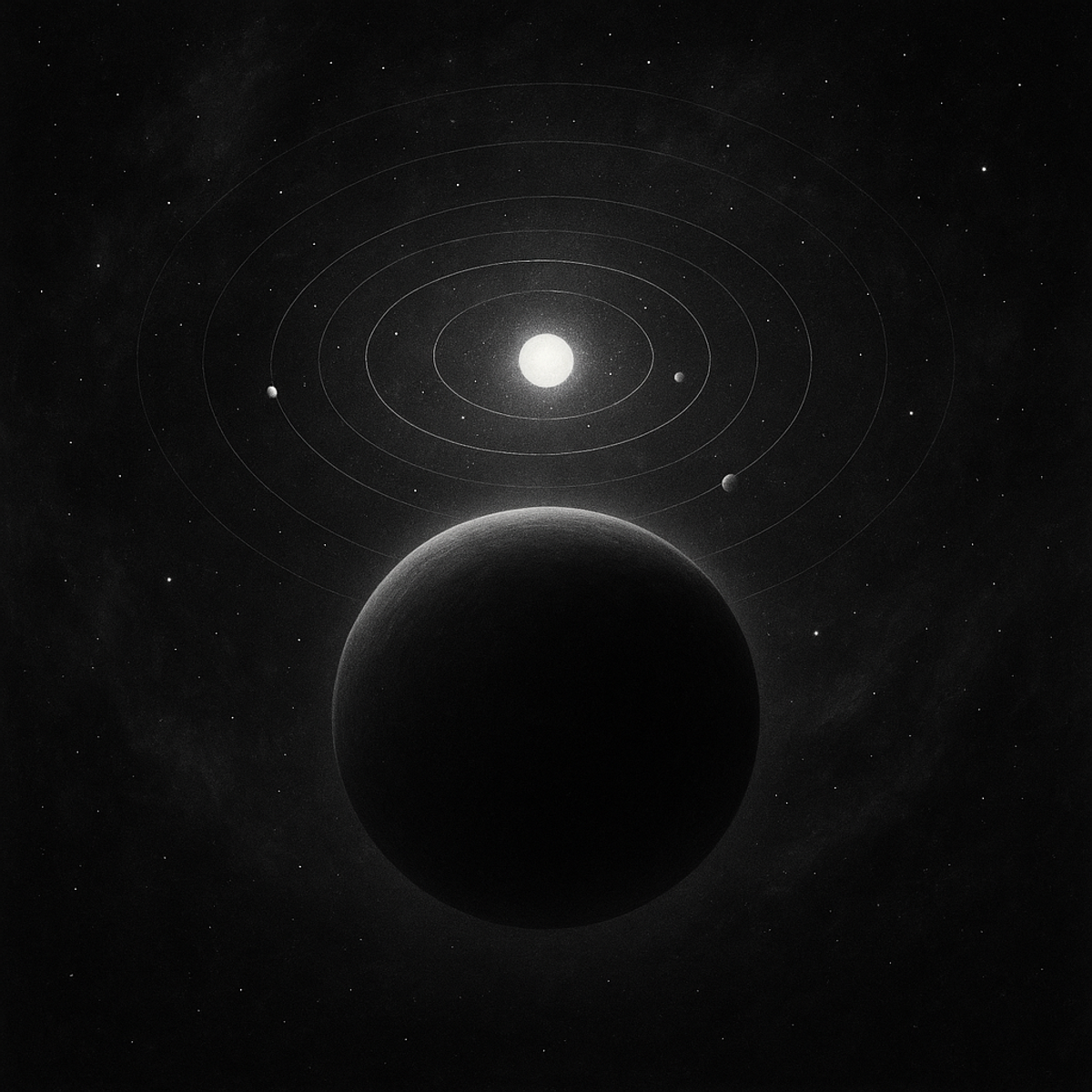
Explore the mystery surrounding the possible existence of a hidden ninth planet in our Solar System, from scientific theories to the latest astronomical discoveries.
A Mystery at the Edge of the Solar System
For years, the astronomical community has been stirred by the possibility of a ninth planet at the edge of the Solar System. Popularly known as 'Planet Nine', this hypothetical celestial body raises questions and theories that challenge our understanding of the cosmos.
Interest in a hidden planet beyond Neptune is not new. Throughout history, the desire to find new planets has been constant, driven by irregularities in the orbits of distant objects. However, it was in 2016 that suspicions intensified, thanks to a study suggesting its existence based on mathematical models and the observation of orbital anomalies in trans-Neptunian objects.
The Evidence Behind Planet Nine
The main argument in favor of 'Planet Nine' comes from the unusual orbits of several objects in the Kuiper Belt, a vast region of icy bodies beyond Neptune. These orbits appear to be clustered in a way that suggests the gravitational influence of an unknown planet.
Computer simulations conducted by astronomers have shown that the presence of a planet with a mass approximately ten times that of Earth, at a distance 20 times that of Neptune, could explain these orbital groupings. However, despite these promising models, Planet Nine remains elusive for direct observation.
The Challenges of Detecting Planet Nine
Detecting such a distant and faint object is a monumental challenge. The vastness and darkness of space beyond Neptune make any potential planet easily lost among the background stars. Additionally, if 'Planet Nine' exists, its reflected light would be extremely dim given the great distance from the Sun.
Current searches are conducted using powerful telescopes and advanced image processing techniques. However, the lack of a precise location and the low luminosity of the presumed planet complicate these observations. The task resembles searching for a needle in a cosmic haystack, requiring patience and advanced technology.
Implications of Its Discovery
The confirmation of a ninth planet would significantly change our understanding of the Solar System. It would not only provide answers about the orbital dynamics of trans-Neptunian objects but also expand the current astronomical paradigm by demonstrating that large celestial bodies still exist to be discovered within our own neighborhood.
Moreover, its discovery could shed light on other scientific questions, such as the origin of giant planets and the evolution of the Solar System. It could offer clues about how planets formed and how gravitational forces affect distant celestial bodies, opening new lines of research in modern astronomy.
Conclusions and Future Explorations
While 'Planet Nine' remains an intriguing hypothesis, the effort to find it does not cease. Future missions and telescopes, both ground-based and space-based, could eventually confirm or refute its existence. Missions like the James Webb Space Telescope could offer new opportunities to explore the edges of the Solar System, providing a clearer view of what lurks in the darkness.
Until the ninth planet is discovered or not, its search will continue to inspire astronomers and capture the public's imagination. This celestial enigma reminds us that our Solar System is much more complex and mysterious than we believe, keeping our curiosity about the cosmos alive.

Free Birth Chart
Discover the sky that existed when you were born
We reconstruct the astronomical map of the moment of your birth with exact planetary positions and advanced interpretation.
Get your free chart