
The Enigma of the Gloucester Sea Serpent
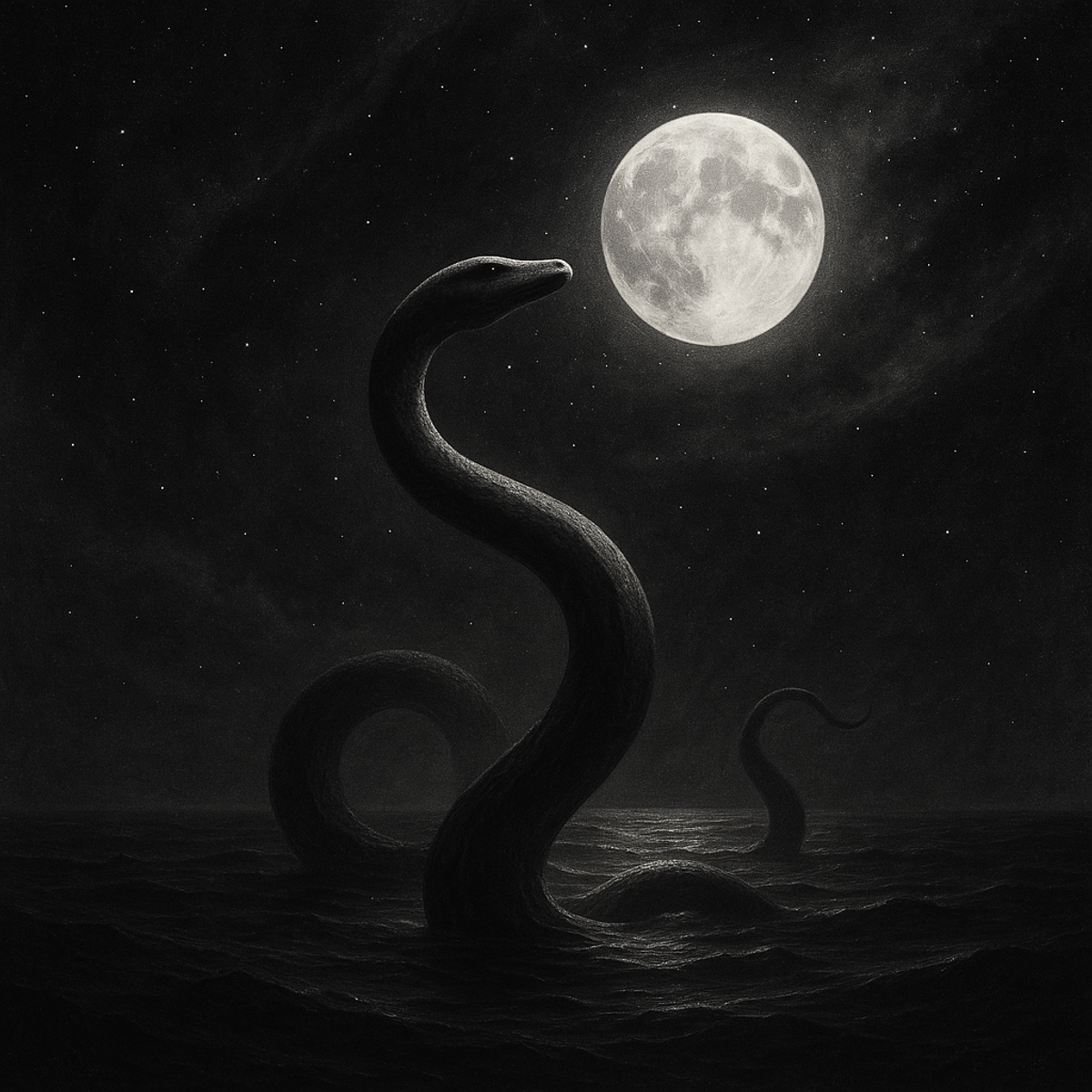
The Gloucester Sea Serpent puzzled 19th-century naturalists, becoming a fascinating mystery of cryptozoology. Explore how science and superstition coexisted.
The apparition that defied science
In the summer of 1817, the residents of Gloucester, Massachusetts, were caught up in one of the most mysterious sightings of the time: the Gloucester Sea Serpent. Described as a being of enormous proportions and serpentine shape, the creature was seen by sailors and locals, generating a wave of reports that flooded local news archives.
Interest in unexplained phenomena like this was common in the 19th century, a time when the unknown sparked both fear and fascination. The Gloucester Sea Serpent quickly became a phenomenon that challenged the science of the time, raising questions about how far nature's ability to hide yet undiscovered secrets could go.
Conflicting witnesses and testimonies
The accounts of the sea serpent presented an astonishing variety. Witnesses claimed it measured over 30 meters in length, with glowing eyes and dark, scaly skin. Some even said they saw the creature majestically rise above the waves, while others described movements suggesting intelligence beyond known animals.
However, these testimonies were often contradictory. While some insisted the creature was clearly visible, others recounted that fear and confusion barely allowed them to distinguish its outline. This disparity led many scientists of the time to be skeptical, suspecting the phenomenon was due to a combination of collective panic and misinterpreted natural events.
The debate among naturalists
The sighting of the Gloucester Sea Serpent not only fueled public fear and admiration but also ignited an intense debate among naturalists and scientists. In an era where new species were being identified almost weekly, the possibility of discovering an unknown marine creature was enticing.
Despite this, many naturalists maintained a skeptical approach, suggesting alternative explanations like schools of fish or the shadow of a whale, phenomena that could create a convincing optical illusion. At the same time, other scientists defended the possibility of an unknown creature, arguing that the oceans still held unexplored mysteries.
Impact on popular culture
The case of the Gloucester Sea Serpent inspired not only the scientific community but also the popular culture of the time. It soon became a recurring topic in newspapers, essays, and eventually in literary narratives. The creature was portrayed as a symbol of the unknown and often of the uncontrollable forces of nature.
In this atmosphere of uncertainty, the serpent became an icon of mystery and adventure. It influenced fictional tales, inspiring both believers in the paranormal and skeptics interested in debunking myths, thus reflecting the peak of modern scientific thought and the human desire for rational explanation.
Legacy and enduring fascination
Although no definitive conclusion was ever reached about the Gloucester Sea Serpent, the phenomenon has not lost its appeal. The mix of the unknown, mystery, and the possibility of the majestic continues to fuel the interest of explorers and cryptozoologists.
Today, the sea serpent is seen as a reminder of our constant struggle to understand the natural world and the limits of human knowledge. It continues to inspire literature and speculation, remaining alive in the collective imagination as a symbol of how fascinating our world can be when it balances between the explained and the unexplained.

Free Birth Chart
Discover the sky that existed when you were born
We reconstruct the astronomical map of the moment of your birth with exact planetary positions and advanced interpretation.
Get your free chart