
Mysteries of the Cosmos: Exploring Dark Galaxies
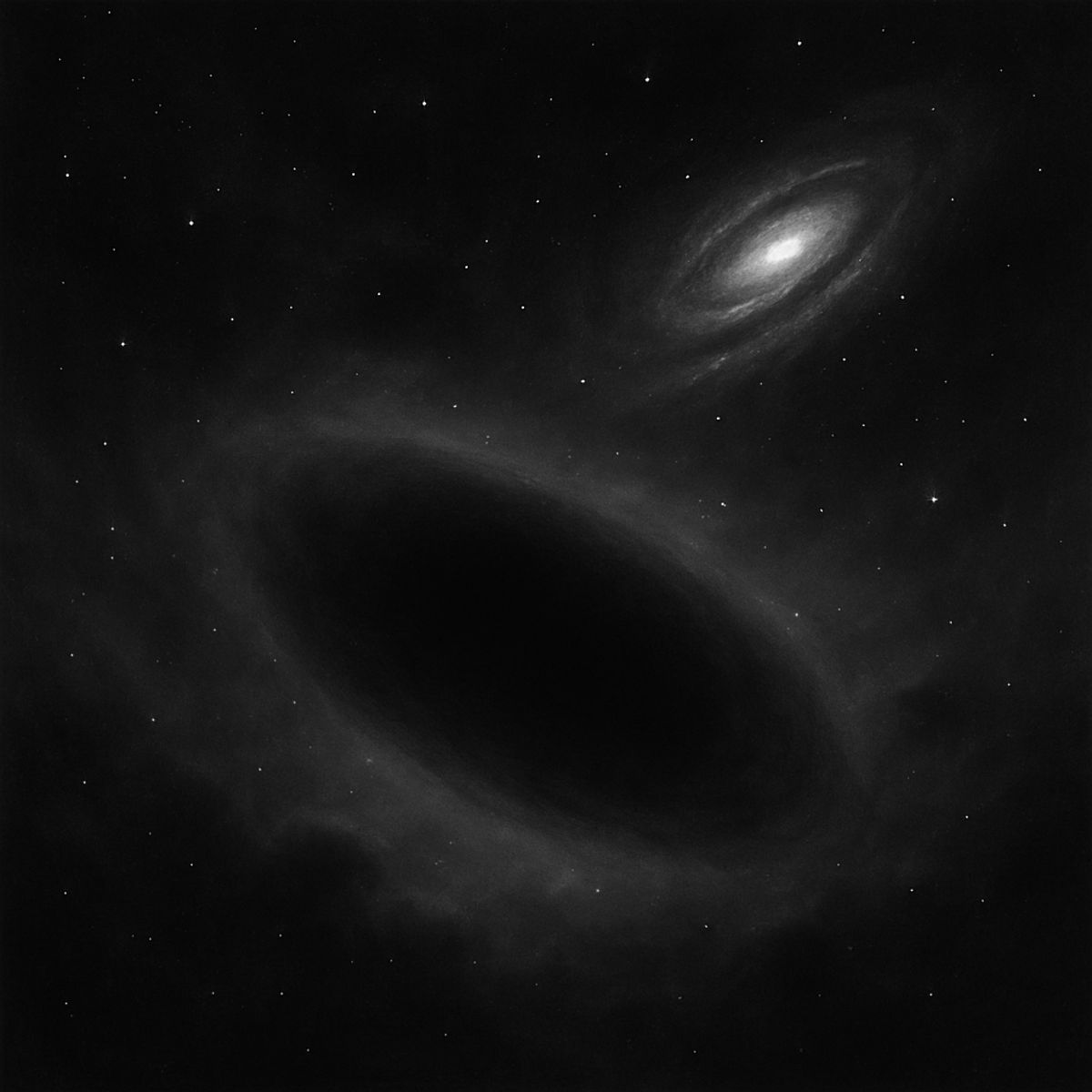
Dark galaxies are enigmatic cosmic structures that challenge our understanding of the universe. Discover how scientists investigate these invisible entities that barely emit light.
What are dark galaxies?
Dark galaxies are one of the greatest enigmas of modern astronomy. Unlike traditional galaxies, they barely emit light, making them virtually invisible to our telescopes. They are believed to be composed mainly of dark matter and gas, with very few stars if any.
The existence of these galaxies was proposed to explain certain anomalies in the movement of observed stars and galaxies. Dark matter, a mysterious and invisible component of the universe, plays a crucial role in this phenomenon. Although we cannot see it, its gravitational influence is undeniable and reveals the presence of these galaxies.
The challenge of their detection
Detecting dark galaxies is a monumental challenge. Astronomers usually rely on light to observe and study celestial objects, but in the case of these galaxies, they must seek alternative methods. One technique used is studying the absorption of light from brighter background galaxies, which can indicate the presence of gas in dark galaxies.
Another strategy involves observing the gravitational distortion they exert on light passing near them. This phenomenon, known as gravitational lensing, provides clues about the presence and distribution of dark matter. However, the search is complex and often, these galaxies remain hidden in the shadows of the universe.
Importance in studying the universe
Understanding dark galaxies is essential for improving our knowledge of the universe and its evolution. These cosmic objects can offer clues about galaxy formation and the distribution of matter in the cosmos. By unraveling their secrets, astronomers hope to answer big questions about the composition and dynamics of the universe.
Moreover, studying dark galaxies helps us better understand dark matter and its influence on the structure of the universe. Since dark matter constitutes approximately 27% of the universe, unveiling its properties could revolutionize our perception of the cosmos.
The first galaxies in history
One reason dark galaxies are so intriguing is their potential link to the first galaxies formed after the Big Bang. It is speculated that these invisible galaxies could be remnants of a time when the universe was young and star formation was just beginning.
By studying these entities, scientists hope to better understand how galaxies formed and evolved in the early cosmos. This not only adds a crucial piece to the cosmic puzzle but also helps reconstruct the history of our universe from its beginnings.
The future of research
With advances in technology and observation methods, the future looks promising for the study of dark galaxies. New telescopes, like the James Webb Space Telescope, promise capabilities that could revolutionize our understanding of these elusive celestial bodies.
Astronomers are eager to discover more about these galaxies and how they fit into the broader scheme of the universe. Each new discovery could challenge our current theories and open doors to new questions, keeping the fascination with the mysteries of the cosmos alive.

Free Birth Chart
Discover the sky that existed when you were born
We reconstruct the astronomical map of the moment of your birth with exact planetary positions and advanced interpretation.
Get your free chart